
Buncombe Resident Lookup Record Trail
One name can appear in several Buncombe County systems for different reasons. The Buncombe County Tax Lookup connects an owner name to a taxable parcel, PIN, situs address, and often a separate mailing address. A recorded deed establishes a transfer or legal description, while the voter profile identifies registration information. Neither one proves that every person at an address lives there now. Court and vital records answer still different questions. Use the record that fits the question, then compare it with another dated source.
| Record | What It Can Confirm | Custodian | Access Route |
|---|---|---|---|
| Tax and parcel roll | Tax owner, PIN, situs, and mailing clue | Buncombe Tax and Land Records | Online Tax Lookup or county counter |
| Recorded deed or plat | Grantor, grantee, recording date, and legal description | Buncombe Register of Deeds | eSearch, counter, or mailed copy request |
| Voter profile | Registration status, precinct, jurisdictions, and voter history | NC State Board of Elections | Individual online search or written list request |
| Court case index | Party role, case number, events, and disposition | North Carolina Judicial Branch | eCourts, clerk terminal, or court file |
| Vital record | Event facts and family relationship when access is authorized | Register of Deeds or NC Vital Records | Index, eligible certificate request, or clerk route |
| Estate or probate file | Executor, heir, devisee, or estate connection | Buncombe Clerk of Superior Court | Portal for public proceedings and clerk file |
For a current connection, begin with property and voter information. For a past resident, add an obituary, estate file, deed, or historical directory. The Register of Deeds has a Quick Name Search, but it is a record index rather than a complete title opinion. A tax owner may be a trust, business, or owner who receives notices elsewhere.
Note: Mark the search date beside every result because tax, voter, and court information can change after the record was first viewed.
Buncombe Resident Name Matches
Common names need a second independent detail. A Buncombe resident lookup should compare a middle initial, approximate year, spouse or business connection, parcel PIN, legal description, court party role, or municipality and precinct. Try initials, former surnames, married names, trust names, and entity punctuation. A match in an official index is a lead, not an identity ruling. County staff can explain what their record contains, but they cannot certify that two same-name results belong to the same person without enough identifiers.
A property row needs special care. Tax Lookup can show a physical situs and an owner mailing address. The situs is where the parcel lies; the mailing address is where the tax office sends correspondence. Either can differ from where the owner resides. Compare the PIN and the deed's legal description before connecting a name to the same land. A voter result should be compared by county, municipality or precinct, registration date, and status, which can be Registered, Removed, or Denied.
Match rule. Treat a person as a likely match only after two independent records line up, and preserve the date and source for both.
Buncombe Resident Court Records
The statewide North Carolina eCourts Portal offers anonymous public Smart Search and Judgment Search access. Smart Search accepts a name or case number. The official guidance also describes location, search type, case type, status, filing-date range, hearing, and judgment filters. A surname wildcard needs at least three letters followed by an asterisk, and a first-name wildcard needs at least one letter followed by an asterisk. Use Buncombe as a location filter when several people share the same name.
A public result can display case information, assignment information, parties, causes of action, events, dispositions, hearings, and financial information when applicable. Judgment rows may show the case number, disposition status, index time, parties, and judgment comments. Sealed, juvenile, expunged, confidential, and sensitive material does not appear in the public portal. A filing is not a conviction, and a charge is not a final disposition.
The Judicial Branch's eCourts guidance explains the public search choices. When the online result is too thin, the clerk's self-service terminal can search cases by defendant, case number, victim, or witness. Paper files are kept in the county where the case is located.
The Buncombe County Courthouse is the local route for clerk services and court-file questions. Buncombe's certified criminal name inquiry requires a full name and date of birth, costs $25, and covers Buncombe criminal charges only. It is a name match, not fingerprint certainty.
The courthouse information page identifies the local court location used for clerk access and records questions.
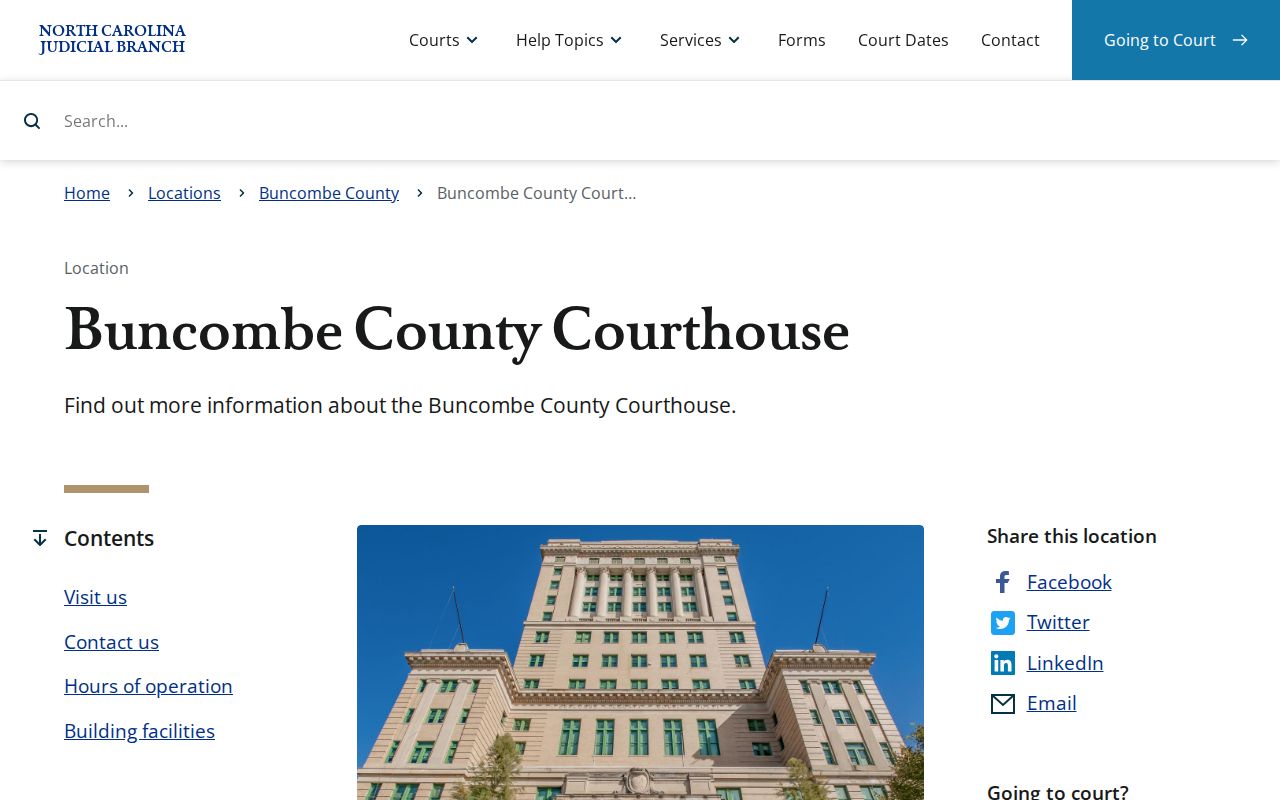
Use a courthouse or clerk channel when a certified paper record, local name inquiry, or a file not fully displayed online is needed.
Note: Record the case number, county, party role, filing date, and disposition before comparing a court hit to another public record.
Buncombe Resident Lookup Court Results
A court result should be read as an inventory of case information, not as a profile of a person. The portal's public case summary and Register of Actions can connect a party name to a case, but its publicly displayed name history is limited. Start with the fields that distinguish one party from another, then move to the clerk file only when the case itself is relevant and publicly accessible.
- Case number: the identifier needed for a clerk, hearing search, or judgment check.
- Party name and role: a name can be a plaintiff, defendant, petitioner, respondent, or another party.
- Case type and location: these separate similar names and show the court division involved.
- Filing date and events: these place the record in time and show procedural activity.
- Disposition or judgment status: the outcome field is more useful than a bare filing headline.
This sample inventory reflects the fields described in the court's Portal guidance. It does not create access to restricted documents. For a federal case, use the Asheville Division's PACER and Clerk channels rather than assuming that a state portal result includes federal records.
The official eCourts search guide shows the Smart Search and Judgment Search workflow used for public Buncombe case research.
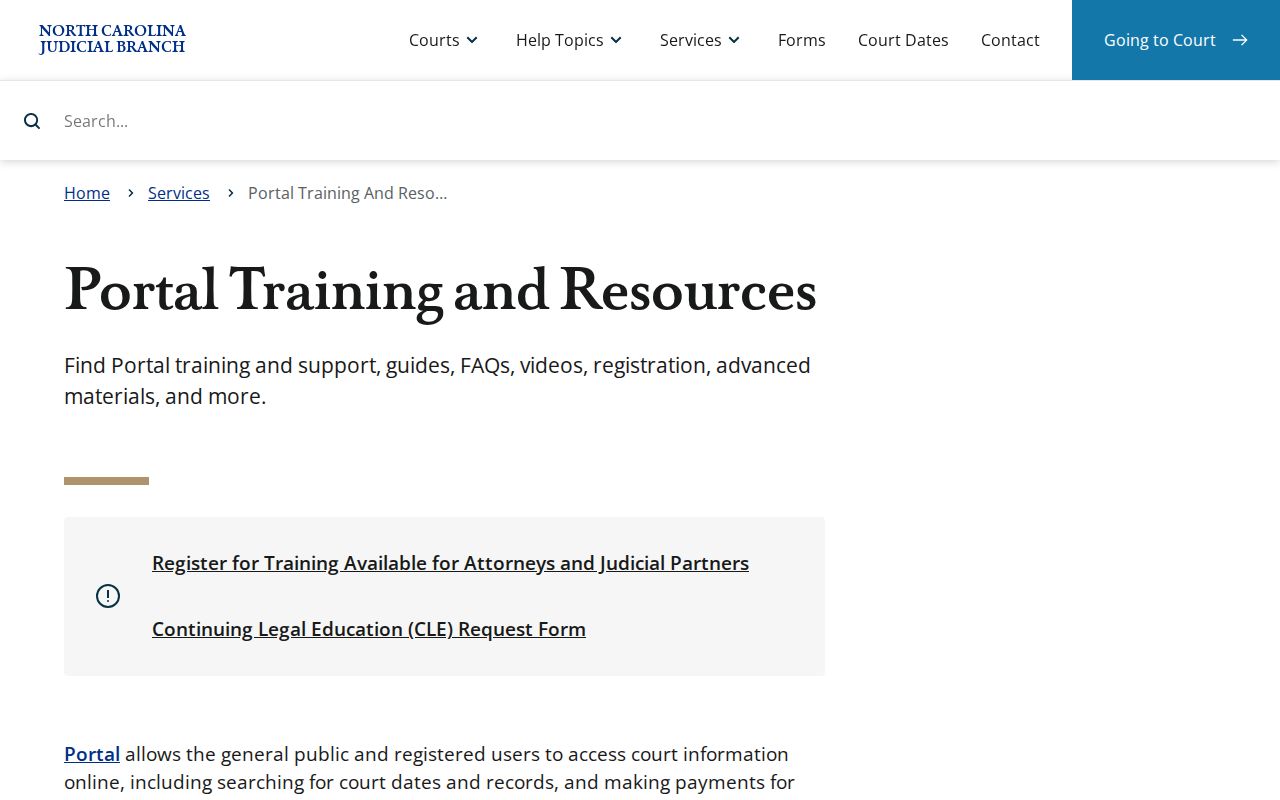
The screen is a useful reminder to run name variants and then verify a match with a record outside the court index.
Buncombe Resident Voter Details
The NC State Board of Elections Voter Search is an individual profile lookup, not a block roster. It requires first and last name, lets the user add a middle initial, year of birth, and county, and requires at least one status selection. A returned profile can show status, party or unaffiliated status, registration date, jurisdictions, precinct, polling location, sample ballot, absentee information, and voter history. It does not reveal ballot choices.
North Carolina law makes some voter information public while keeping full or partial Social Security numbers, date of birth, email, driver-license information, voter-ID images, and related identifiers confidential. G.S. 163-82.10 governs the public and confidential split, and G.S. 163-82.10B separately protects dates of birth. A protected voter can have a physical address withheld through the Address Confidentiality Program or an order-based procedure.
For a selective or full voter file, use the written-request channel described by the state instead of trying to turn a personal profile into a bulk search. The research did not establish a current county price or delivery format, so confirm the request terms with Elections before relying on a list.
Buncombe Resident Vital Route
Vital evidence follows a separate access rule. The Buncombe Register of Deeds issues many Buncombe-event birth, death, and marriage certificates, while NC Vital Records maintains the statewide registry. The county online route offers eligible requestors certified birth, death, and marriage certificates for $10, plus any applicable card fee. County requests require photo identification and a relationship, agency, or legal-rights basis. The county's marriage index begins in 1842, but an index or a date reference does not make every certificate freely available.
State orders follow a different process. NC Vital Records lists a $24 state search or first-copy fee and a $15 additional same-search copy fee, with current processing dates to be checked before ordering. Divorce certificates use NC Vital Records, while a decree or case file comes from the Clerk of Court where filed. Under G.S. 130A-93 and G.S. 130A-93.1, certified-copy eligibility, restricted birth data, and fees are record specific.
The NC Vital Records gateway directs requestors to the state certificate channels and requirements.
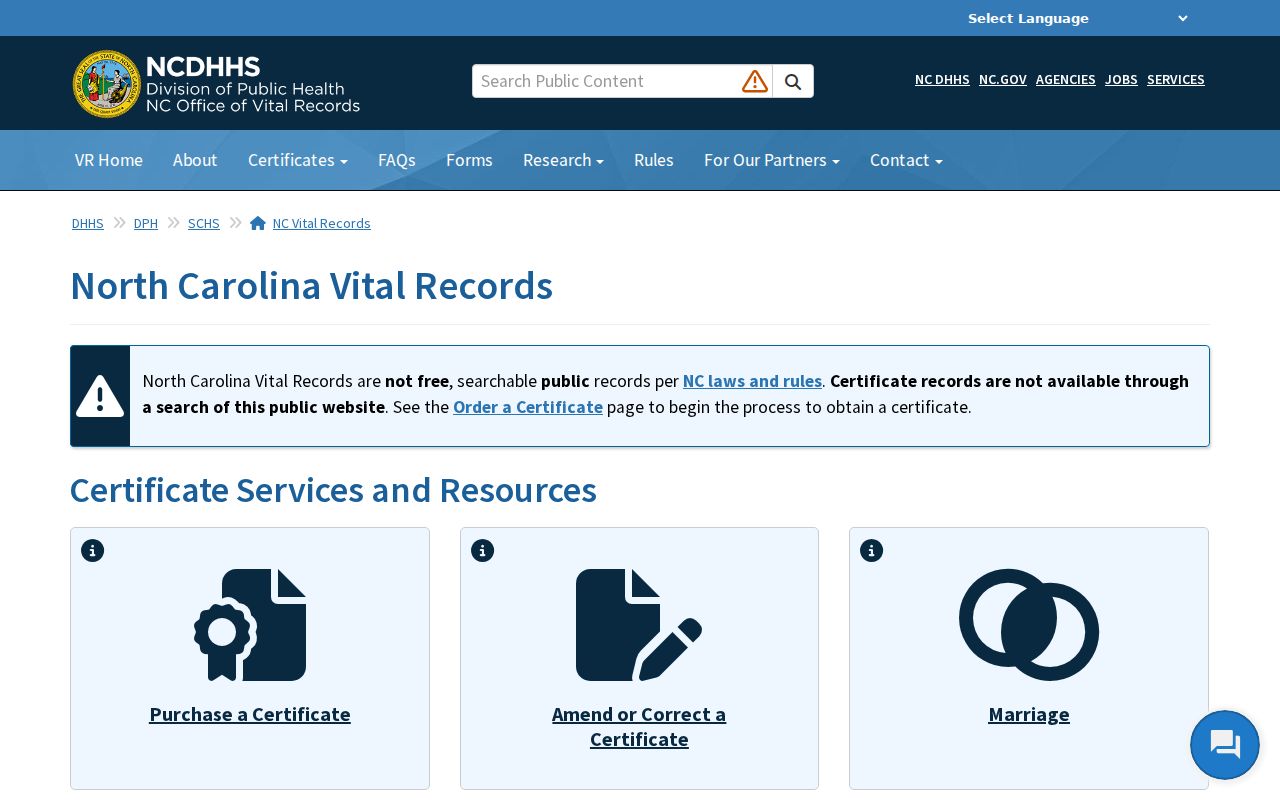
A vital certificate can confirm an event only when the appropriate custodian and eligibility route permit its release.
Note: Original biological-parent and adoption records are not unlocked by an ordinary county birth-certificate request.
Verifying a Buncombe Resident Across Records
Use a short sequence when the goal is to test whether two records concern the same Buncombe resident. Begin with one dated anchor. A parcel PIN and legal description are stronger property anchors than an owner name alone. Then check a public voter profile, court result, recorded instrument, or historical source that supplies a second connection. Stop when the records conflict instead of filling the gap with an assumption.
- Search the person's name in Tax Lookup and write down the owner name, PIN, situs, mailing clue, and observation date.
- Use the owner name in the Register of Deeds index and compare the deed's legal description or parcel references with the PIN.
- Run the name, middle initial, and spelling variants in eCourts with Buncombe selected, then compare party role and case dates.
- Check the voter profile for county, precinct, registration date, and status without trying to obtain protected date-of-birth information.
- When an official copy matters, ask the proper custodian for the existing deed, court file, certificate, or estate record.
- Docket
- A court's running record of filings, hearings, events, and actions in one case.
- Index versus image
- An index is a searchable list of record details. An image is the scanned document or page, which may have separate access rules.
- Certified copy
- A copy issued or authenticated by the record custodian for an official purpose, subject to its fee and eligibility rules.
- PIN
- The parcel identification number used to distinguish one property record from another in county systems.
For a full address-by-address chain, use the Buncombe street directory after the one-person question becomes a street question.
Buncombe Resident Heir Trails
For an heir, search an estate or nonconfidential special proceeding under the deceased person's name, then ask the Clerk for a public file if the online case result is not enough. Executor, heir, or devisee names can be tested against deeds, obituaries, and directories. Estate files can show relationships and addresses, but they do not promise a complete family list. A recorded executor deed may supply the next link in the property trail.
For a former classmate, historical collections are more useful than current rolls. Pack Special Collections and DigitalNC preserve local directory and yearbook paths. The research identifies Asheville High volumes from 1922 through 1927, Asheville School volumes from 1905 through 1964, plus Buncombe High and A-B Tech listings. Pair a class year with a directory, alumni material, newspaper notice, or obituary, then keep the date of each result clear.
State correctional information answers a narrow question. North Carolina DAC Offender Search covers state prison, probation, and parole information, with historical material back to 1972, but excludes the county jail. It is not a complete criminal-history record.
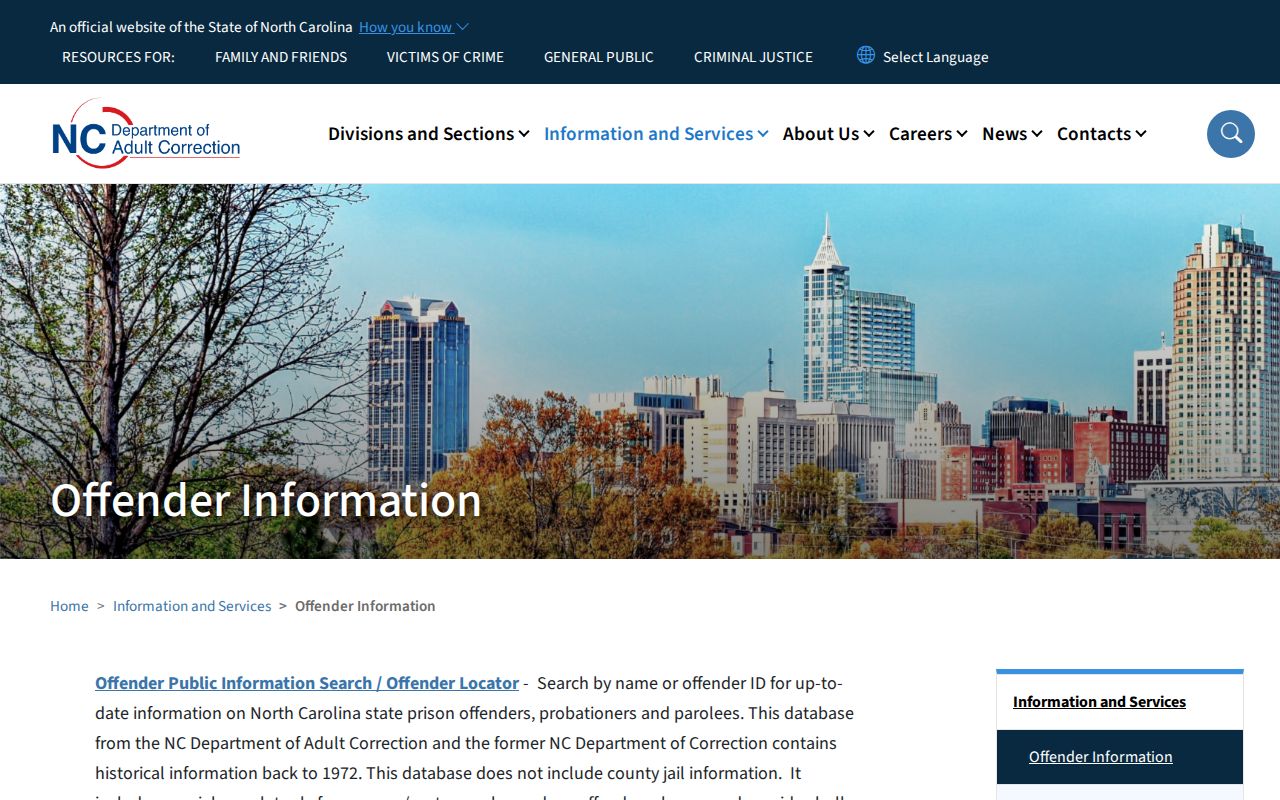
Use the state search only for its stated correctional scope, and confirm custody or status dates with the responsible agency.
Buncombe Records Requests and Corrections
North Carolina's Public Records Law provides access to existing public records. G.S. 132-1 defines public records, and G.S. 132-6, 132-6.1, and 132-6.2 address inspection, electronic records, formats, actual-cost copies, certification, and special service charges for extensive work. The law does not require an office to create a new cross-record profile, solve an incomplete-name search, or perform a research project.
Ask for the specific existing item: a named deed by book and page, a parcel card by PIN, a court file by case number, or a particular voter-record correction process. The practical fallback chain is the portal, office counter or clerk terminal, phone or mail request, then library and archive support for historical records. When a result is wrong, contact the source custodian. Tax and Land Records handles parcel information, Elections handles voter records, the Register of Deeds handles recorded-index or document issues, and the Clerk handles court files.
Note: A clear request names the existing record sought and does not ask an agency to compile a new dossier from separate systems.
Limits of a Buncombe Resident Lookup
Some paths properly end. Vital, adoption, juvenile, sealed, expunged, protected-victim, DMV, utility, and confidential voter information are not opened by a broad name search. North Carolina's Address Confidentiality Program, authorized by Chapter 15C, provides a substitute address and mail forwarding for qualifying survivors of domestic violence, sexual assault, stalking, or human trafficking. A qualifying voter can use the program's documentation to keep a physical address out of public inspection while other voter information remains available as law permits.
Public property data also has limits. A tax result is not a title certificate, survey, or proof of occupancy. A historical directory appearance is not proof of a current address. Commercial people-finder tools as a category can blend old directories, property, court, broker, and marketing feeds. They may conflate same-name people, omit protected information, or lag behind the custodian. Return to the official source when a detail matters.
Lawful use. Use Buncombe resident records for lawful personal research, family history, estate questions, or a careful records check. Do not use a result to stalk, harass, intimidate, or harm anyone.